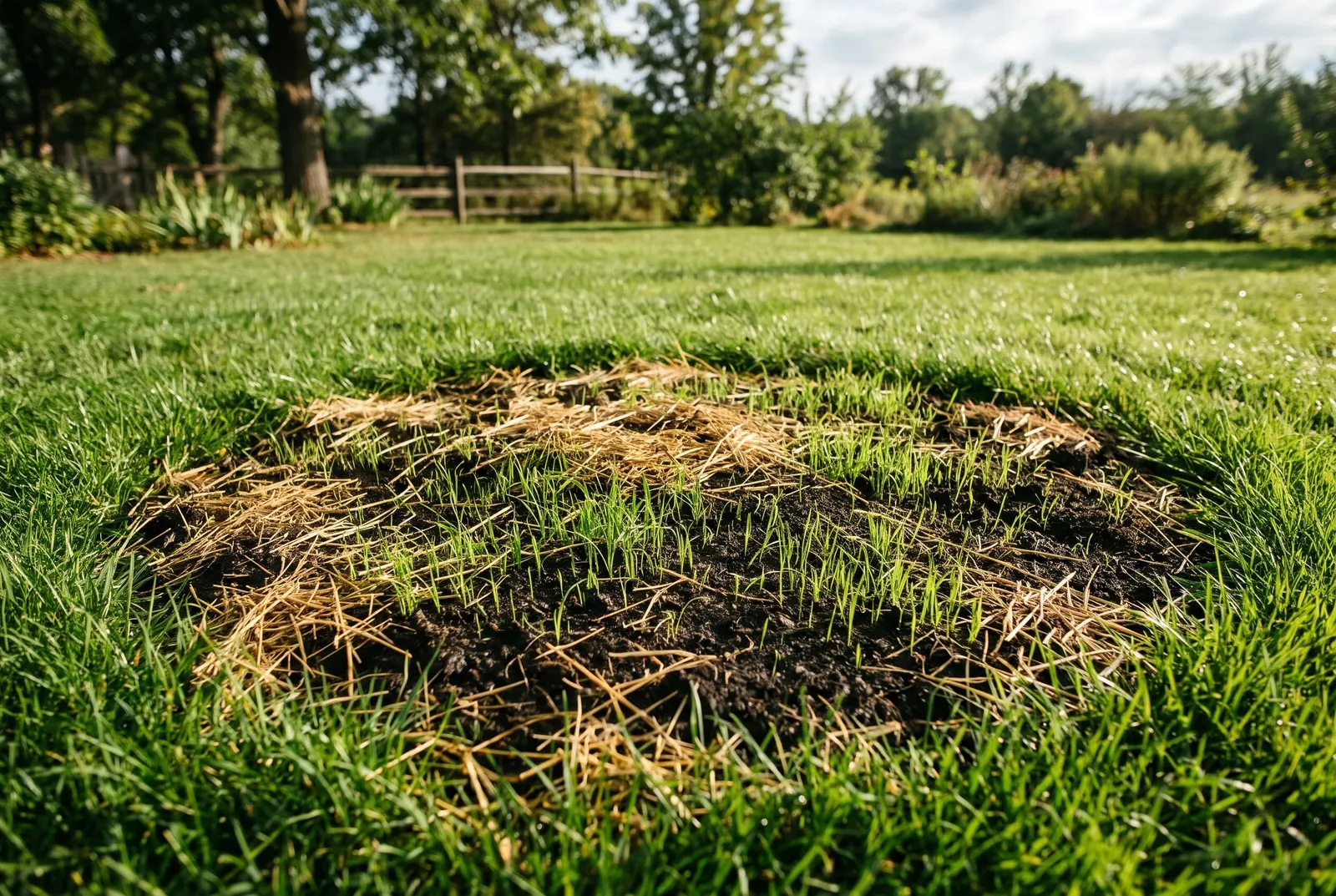
What's left after the grinder leaves
A ground stump leaves a mound of wood chips mixed with soil. Under it there's a hole roughly the width of the old stump, as deep as the grinder went. Around it, the base of the main roots is still in the ground. If surface roots were ground too, there will be shallow trenches running out from the hole.
How you finish the spot depends on what goes there next. For most people it is lawn.
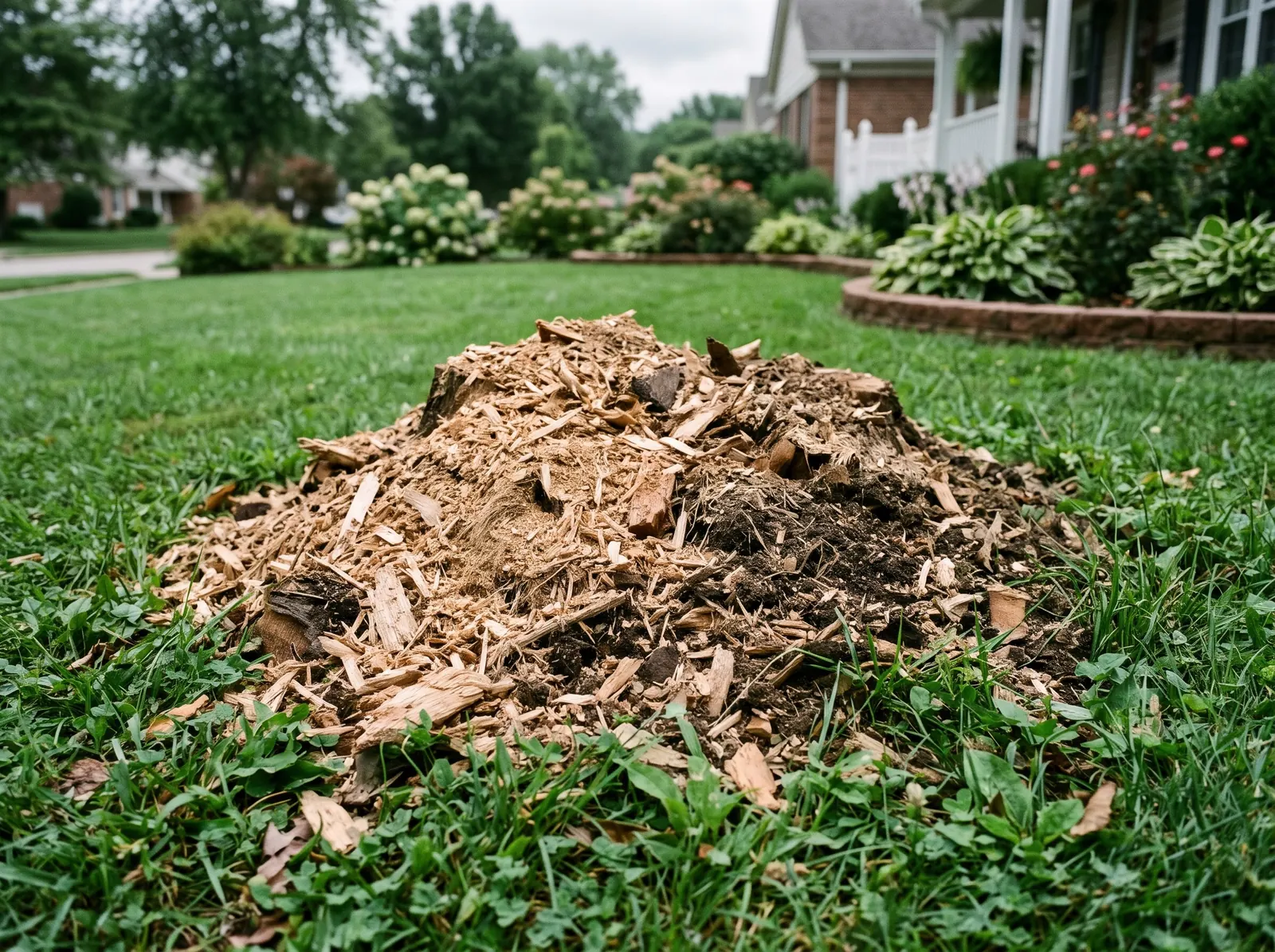
Dealing with the chips
Use them as mulch
Grindings make serviceable mulch once they age. Maryland's Home and Garden Information Center, part of University of Maryland Extension, suggests letting them sit for about a year. Then spread them about two inches deep around trees and shrubs, keeping them off trunks and stems. They can also be worked into beds as an organic soil amendment.
Fresh chips spread thin as a top layer are less of a problem than chips mixed deep into soil. The main issue is planting directly into them.
Remove them
If you plan to grow grass, take most of the chips out of the hole. University of Illinois Extension recommends hauling off the grindings before planting turf. Wood that breaks down in the soil can tie up nitrogen and make it hard for grass to grow. Many providers offer chip removal as a separate line item, so ask before the day of the job. If you're doing it yourself, a shovel, a wheelbarrow, and a tarp are enough for most single stumps.
Leave them
Leaving chips in the hole is the cheapest option and fine if you don't need the spot to look like lawn soon. Expect it to sink as the wood breaks down, and expect grass to be patchy over it for a while.
Filling and settling
Once the chips are out, fill the hole with good topsoil. Extension advice from Maryland notes that grass needs plenty of topsoil depth for good roots, about a foot. Your topsoil should smell like healthy soil, not sour or chemical.
The spot will settle, for two reasons. Loose fill compacts over the first few rains. Roots and leftover wood below keep decaying for years, and the ground above sinks slowly.
Practical steps:
- Overfill a little. Mound the topsoil a few inches above grade so it settles closer to level.
- Water it in. A good soak, or a couple of rains, settles fill faster than waiting.
- Top up. Check after a few weeks and again the next spring. Add soil where it dips.
- Watch root lines. Ground roots leave trenches that can sink too. Fill them the same way.
Reseeding vs. planting a new tree
Reseeding the lawn
Cornell's turfgrass guidance names mid-August to mid-September as the best time to seed in New York. The soil is still warm, and weeds are less of a problem. Spring seeding is possible but less predictable because of weather and weeds.
Prepare the spot the way Cornell recommends for any new seeding: work compost into the top several inches if needed, rake the surface smooth, press the seed into the top quarter- to half-inch of soil, and keep it moist. A thin straw mulch helps on slopes.
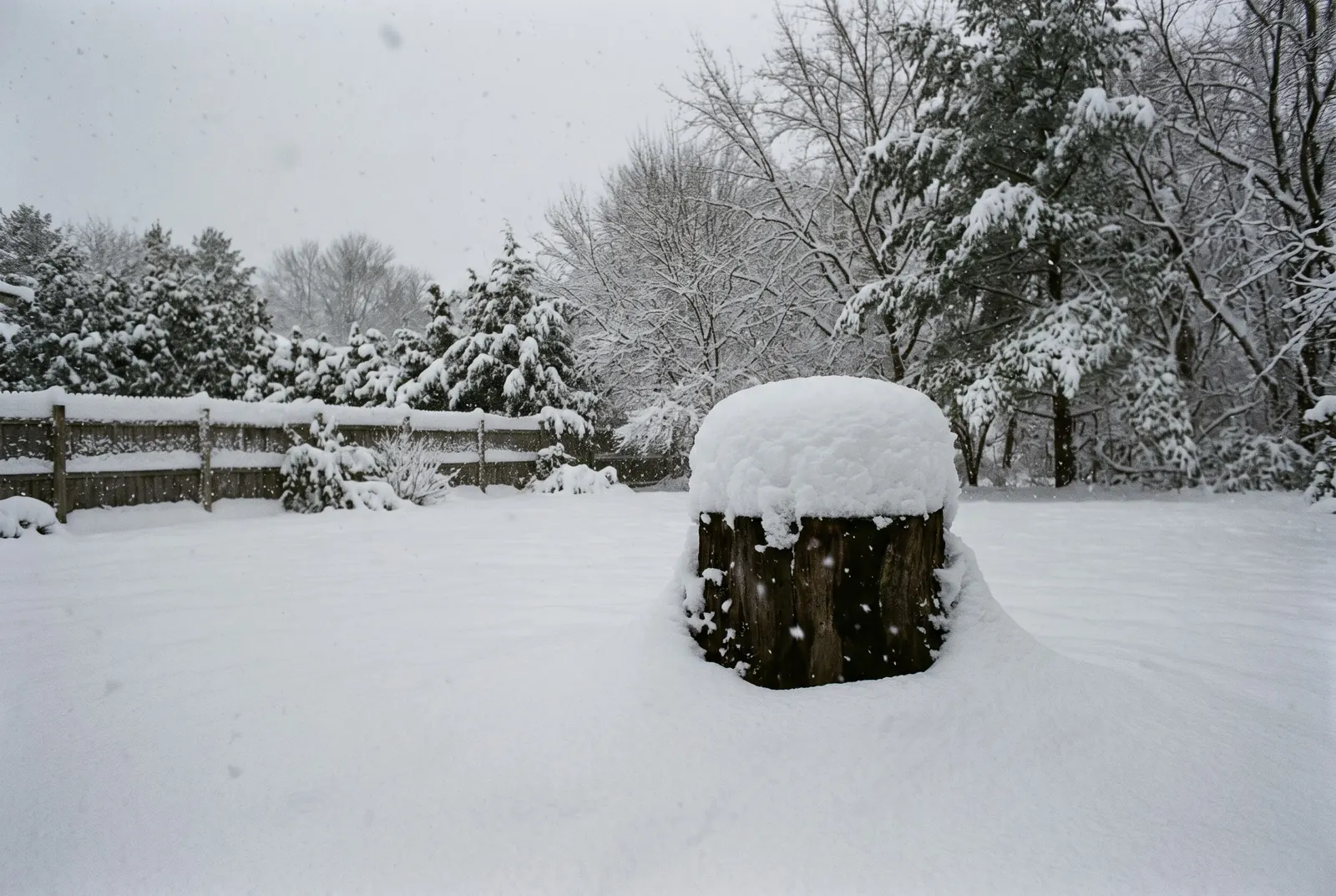
UMass Extension notes that late seedings struggle as days shorten. Overseeding and small repairs can usually continue into October, but returns drop as fall goes on. In Western New York, where snow can arrive in November, a patch seeded too late may not fill in before winter. If you miss the fall window, cover bare soil to limit erosion and seed the next season.
Planting a new tree
Most people plant the replacement a few feet away from the old stump. The soil there is free of decaying wood and the old tree's roots. If you need the same spot, remove the grindings and backfill with topsoil before planting.
If the old tree died of a serious disease, Oklahoma State University Extension advises against putting a new tree in the same spot.
Around Buffalo, the most common case is ash killed by emerald ash borer, an insect rather than a disease. The Town of Amherst's tree management plan recommends against planting green ash, and choosing a different species makes sense for any yard. The Buffalo stump grinding overview covers the regional ash situation.
Tree lawn stumps
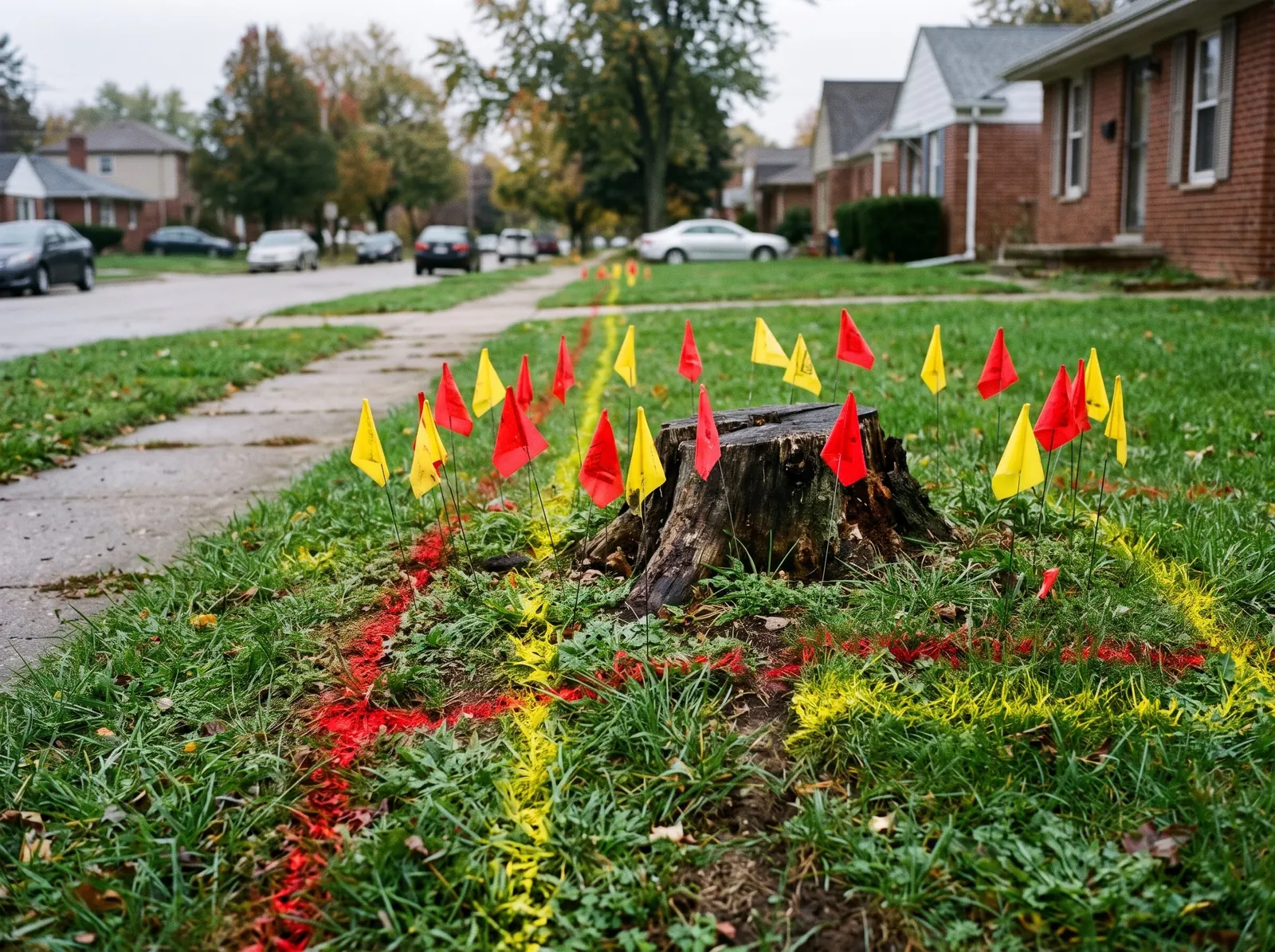
If the stump was in the strip between the curb and sidewalk, your town or village may handle the fill and replanting, or it may control what can be planted. Cheektowaga, for example, has a program where the town grinds right-of-way stumps, fills the hole with topsoil and seed, and offers replacement trees. West Seneca requires replacement trees in the right-of-way to come from an approved list. Check before you plant. The town guides have more detail.
Timing it all for the WNY season
A workable sequence for a lawn:
- Late spring to midsummer: have the stump ground once the ground firms up.
- Right after: remove chips, fill with topsoil, and water it in.
- Mid-July to early August: top up any spots that settled.
- Mid-August to mid-September: seed.
- Next spring: check for dips and top up again.
If the stump is ground in fall, fill it then and seed the following August. For cost questions, see stump grinding cost.
Common questions
Can I leave the wood chips in the stump hole?
You can, but grass and new plants often struggle there. University of Illinois Extension notes that wood mixed into soil can tie up nitrogen as it breaks down, and recommends hauling off the grindings if you plan to grow grass. For a lawn, rake most of the chips out and fill with topsoil instead.
Can I use stump grindings as mulch?
Yes, once they age. Maryland's Home and Garden Information Center, part of University of Maryland Extension, suggests letting grindings age about a year, then spreading them about two inches deep around trees and shrubs, kept away from stems. They can also be used as an organic soil amendment.
When should I reseed after stump grinding in Buffalo?
Cornell's turfgrass guidance names mid-August to mid-September as the best time to seed a lawn in New York, when soil is still warm and weeds are fewer. Spring seeding works, but results are less reliable. If the stump is ground in summer, you have time to fill, let it settle, and seed in that window.
Can I plant a new tree where the old one was?
It is usually easier a few feet away, where the soil is free of old roots and decaying wood. If you need the same spot, remove the grindings and refill with topsoil so the new roots aren't growing into fresh chips. If the old tree died of a disease, extension advice is not to replant in the same spot.
Sources
- University of Illinois Extension: What to do with a tree stump
- University of Maryland Extension, via Ask Extension: Tree stumps
- Oklahoma State University Extension: Stump removal
- Cornell University: Establishing a new seeding
- UMass Extension: Late season establishment considerations
- Town of West Seneca: Tree maintenance and replacement
- Town of Cheektowaga: Highway Department
- Town of Amherst: Community tree management plan (2023)