Grinding vs. removal: what each one leaves behind
People use "stump removal" for two different jobs, and quotes do not always say which one they mean.
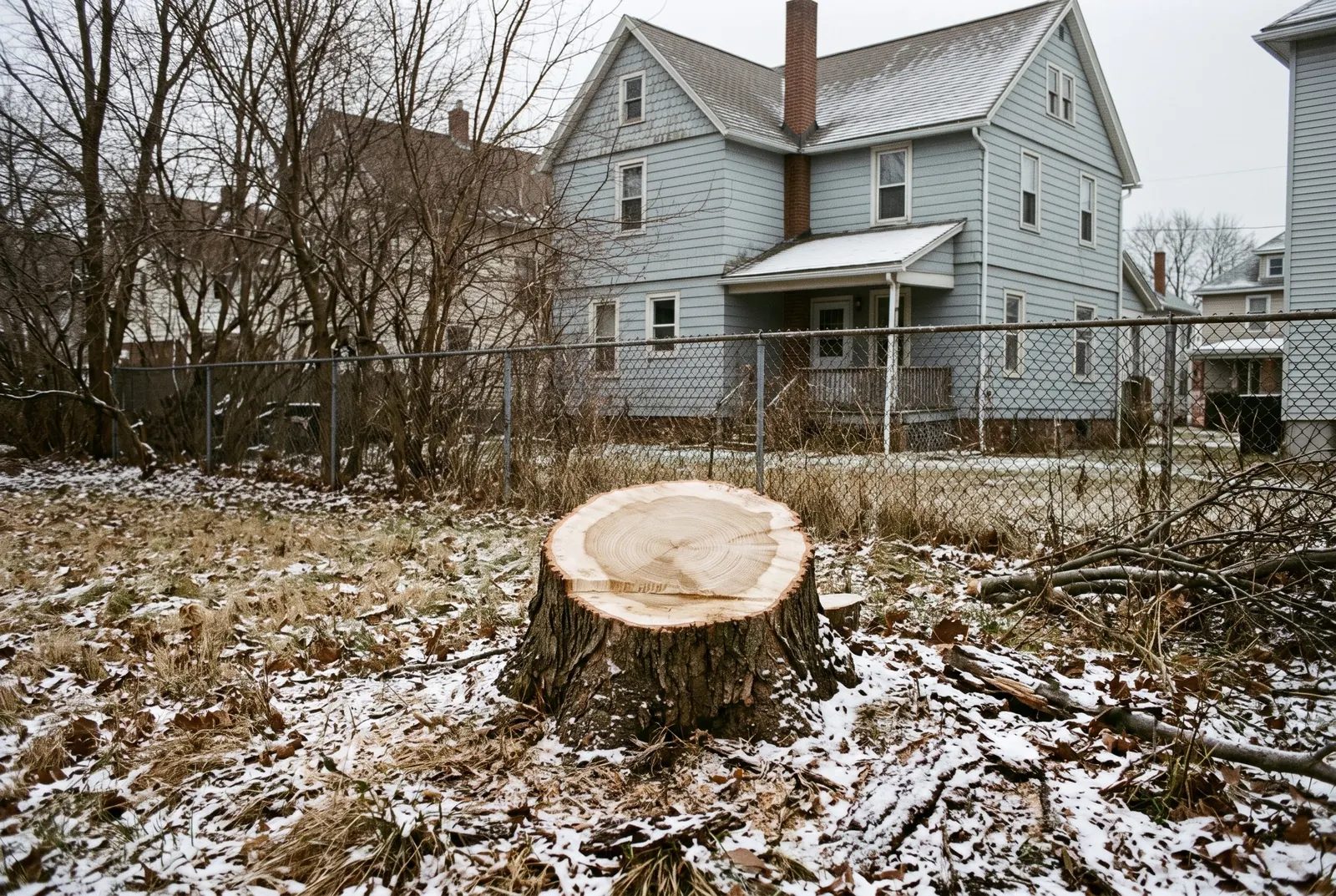
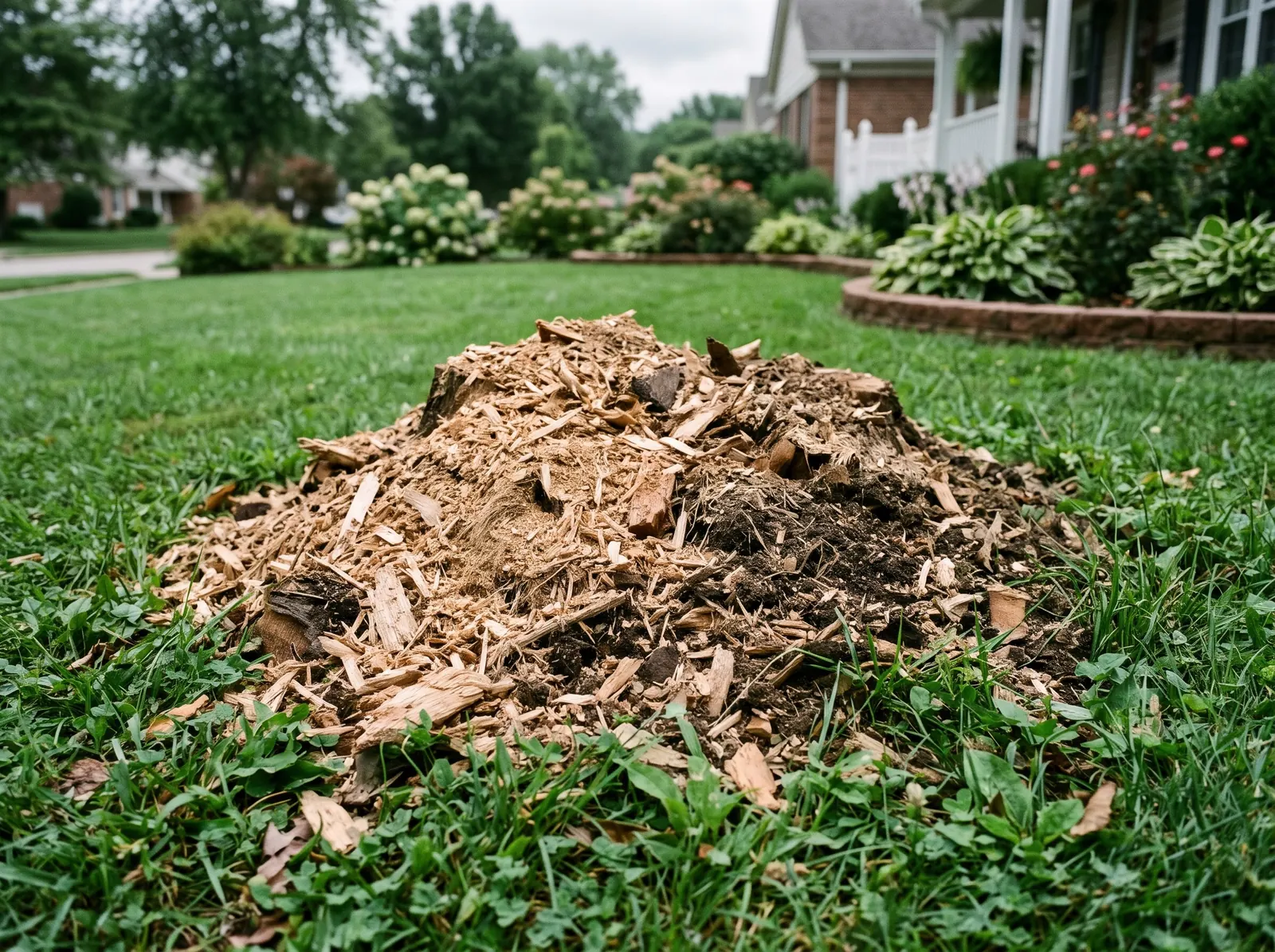
Stump grinding cuts the stump into chips below ground level. The roots stay in the soil and decay over time. The yard is disturbed in a small circle around the stump. Most residential stumps around Buffalo are handled this way. See stump grinding for how it works.
Full removal, also called extraction, digs out the stump along with its main roots. HomeAdvisor describes manual removal as cutting the taproot and surrounding roots until the stump loosens. On larger stumps this usually means an excavator or backhoe. The result is a big hole and a pile of root-laden soil.
When full removal makes sense
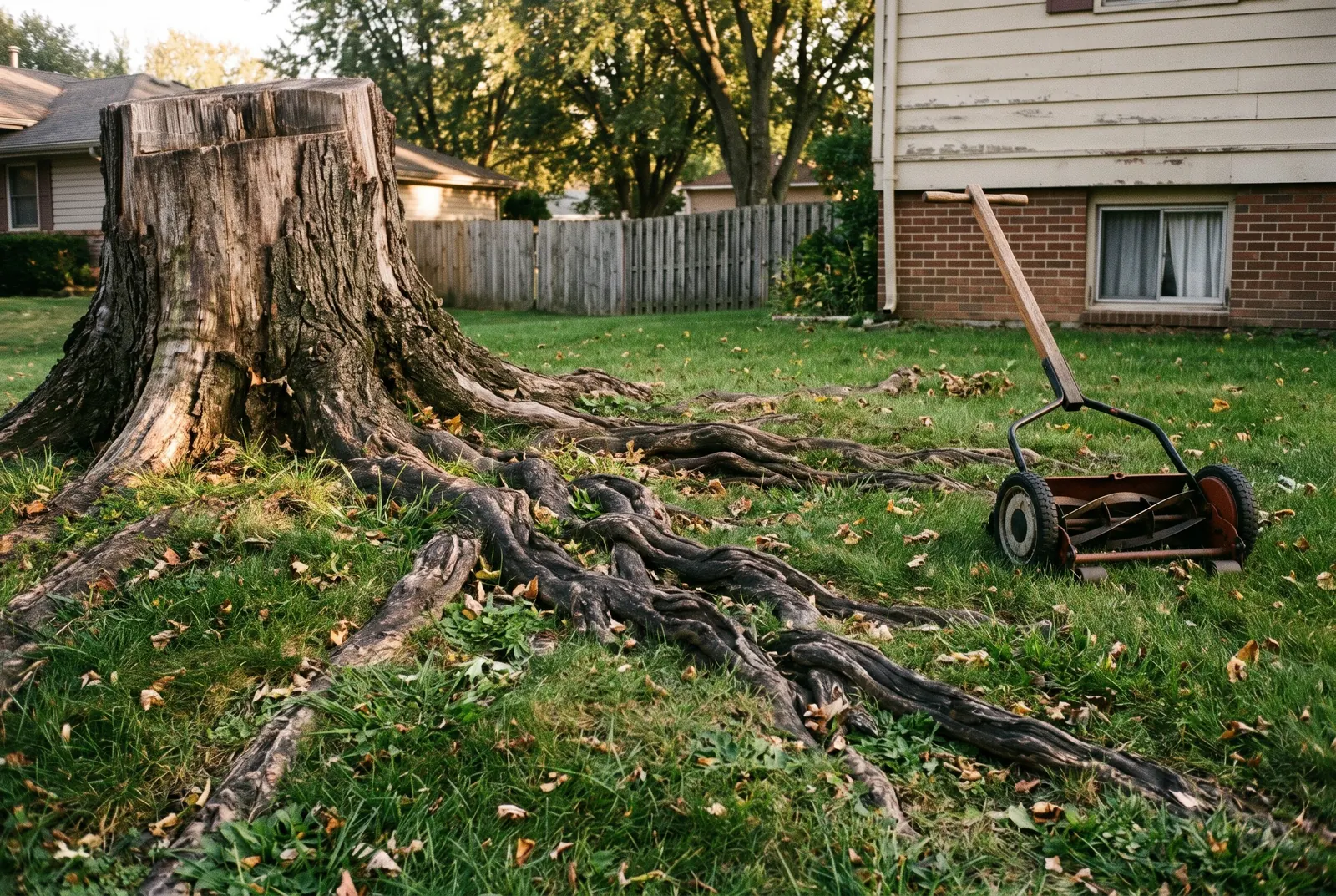
Grinding is enough for most lawns and beds. Removal is worth considering when the ground has to carry a load or be reshaped.
New foundation, addition, or garage
Wood buried under a footing or slab will rot. As it breaks down, it can leave voids that let the structure settle. If the stump is inside or near a building footprint, ask the builder or designer what they need before you choose a method.
Patio, walkway, or driveway
Pavers and concrete need a stable, compacted base. A ground stump with roots left in place may be fine if the grinding goes deep and the fill is compacted. Some installers will still want the root mass out. Let them decide, since they are the ones warrantying the work.
Regrading or drainage work
If the yard is being regraded or a swale cut to move water away from the house, roots in the way have to come out anyway. In that case, removal may happen as part of the excavation work rather than as a separate stump job.
Replanting in the exact spot
Most people move a new tree a few feet over instead. If the spot is the only option, full removal clears out old wood that would otherwise sit in the new root zone. After stump grinding covers replanting in more detail.
The tradeoffs: disturbance and cost
Disturbance
Extraction is a bigger job on the yard. Heavy equipment needs a wider path than a compact grinder, and it can rut lawns, especially when the ground is soft in spring. Pulling large roots can lift soil, edging, and nearby plantings. Roots of a big tree often run under fences, walks, or a neighbor's yard, and removal may stop at the property line.
There are hazards underground, too. Digging out a stump goes deeper and wider than grinding, so the UDig NY locate request matters even more. Upstate New York, including Erie County, uses UDig NY: dial 811 or file online at least two full working days before digging. If a contractor does the work, state law requires the contractor to file. Private lines on your property are not marked.
Cost
National cost guides consistently put removal above grinding:
- Angi says full removal costs slightly more than grinding.
- HomeAdvisor lists stump grinding at about $150 to $500 and manual removal at about $200 to $700.
- Lawn Love (updated December 2025) lists national averages of about $295 for grinding and $330 for removal.
These are national figures, not Buffalo prices, and the job itself drives the final number. Extraction also tends to bring extra costs that grinding does not: hauling the stump and root ball, buying fill, and repairing the lawn. For the full list of cost factors, see stump grinding cost.
Alternatives people ask about
University of Illinois Extension covers a few options besides grinding and digging:
- Letting it decay. Stumps can take years to rot on their own. Speed depends on size, species, and site.
- Chemical stump products. These usually contain salts like potassium nitrate that help dry the wood. They do not dissolve a stump overnight.
- Burning. Only where local rules allow, and wet wood is hard to burn. Extension advises against pouring fuel on a stump.
Live stumps of some species can sprout. If yours is sending up shoots, grinding or treating the fresh cut is more reliable than waiting it out.
If roots are the real problem
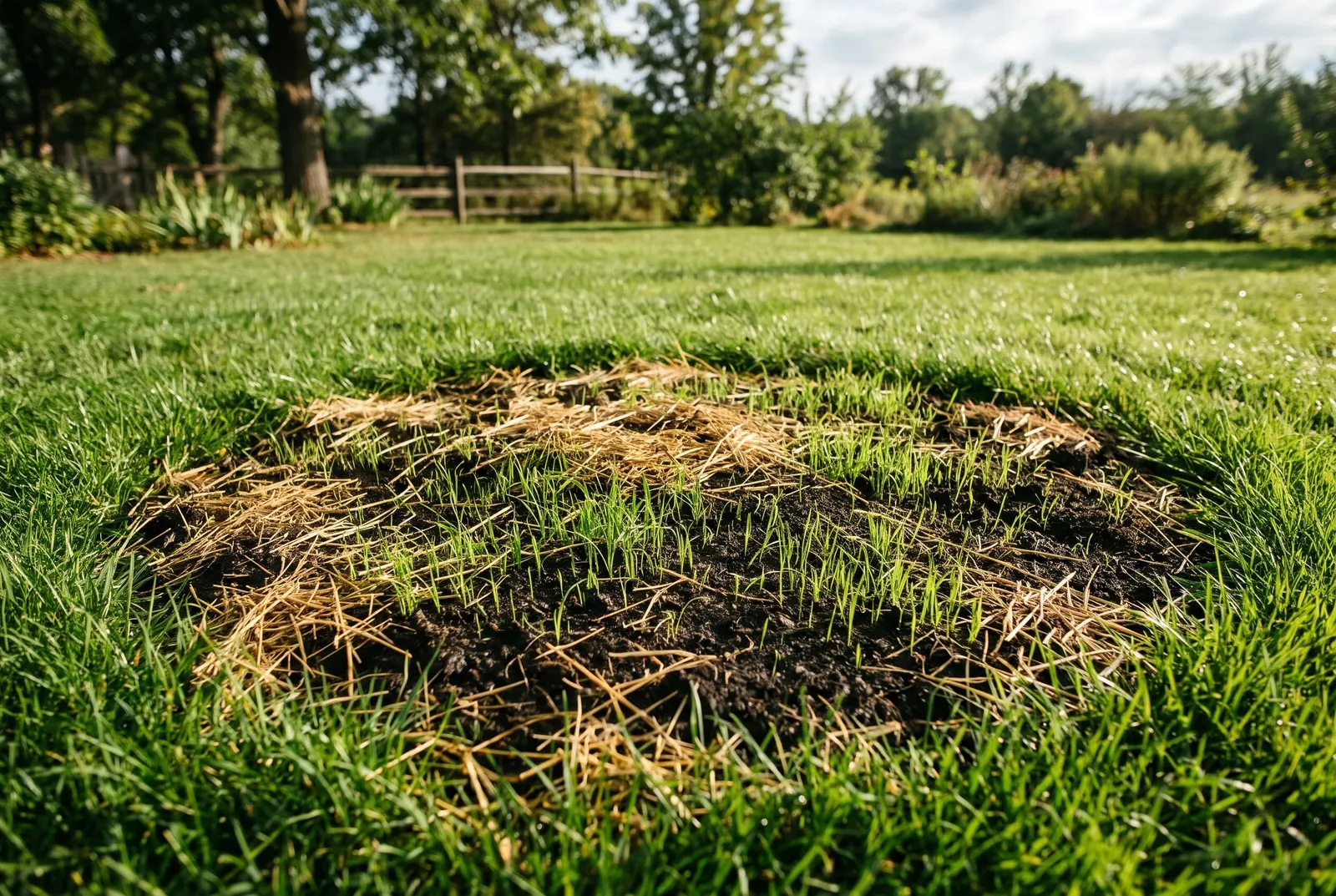
Sometimes the stump is not the issue. The problem is roots across the lawn. Surface root grinding explains how those are handled, and why they need more care when a living tree is nearby.
Common questions
What is the difference between stump grinding and stump removal?
Grinding cuts the stump into chips below ground and leaves the roots to decay. Removal digs out the stump and its main roots, usually leaving a large hole. HomeAdvisor describes manual removal as cutting the taproot and surrounding roots until the stump loosens. Many quotes say removal when they mean grinding, so ask which one is being priced.
Is stump removal more expensive than grinding?
Usually. Angi says full removal costs slightly more than grinding. HomeAdvisor lists grinding at about $150 to $500 and manual removal at about $200 to $700 nationally. Lawn Love's 2025 guide lists averages of $295 for grinding and $330 for removal. Large stumps, tight access, and hauling can push either well beyond those figures.
Do I need full removal before pouring a patio or foundation?
Often, yes. Wood left under a slab or footing rots and can leave voids. Ask whoever is designing or building the project what they require under the work area. Some will accept deep grinding plus compacted fill; others want the root mass out.
Can a stump be pulled out with a truck?
It is not a good idea. University of Illinois Extension notes that large structural roots are very strong and that pulling with vehicles can damage the vehicle and the surrounding landscape. Large stumps are normally dug out with an excavator or ground instead.