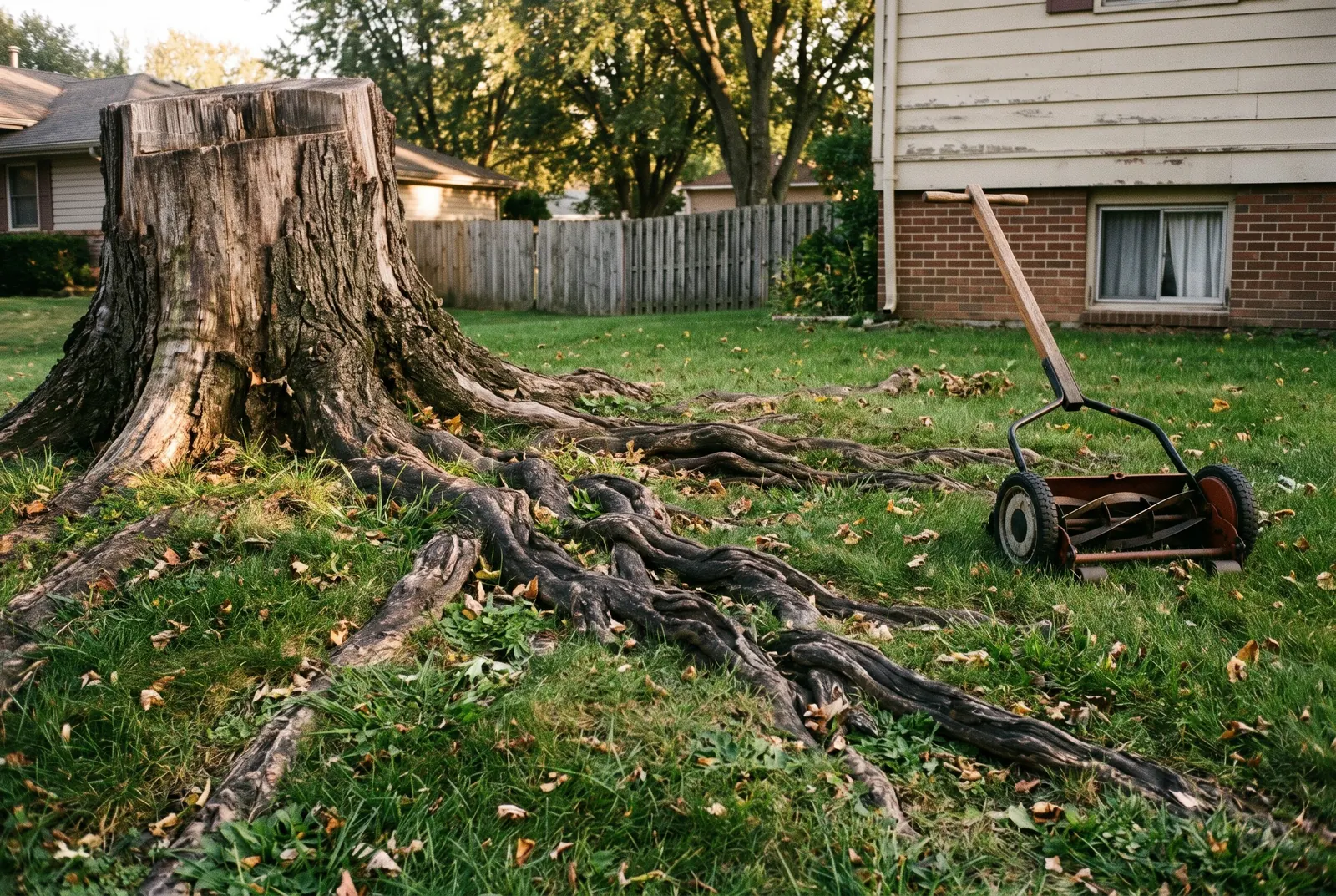
What surface roots are and why they show up
Most of a tree's roots are shallow. UGA Cooperative Extension notes that active root growth runs mostly sideways, within about the top 18 inches of soil. Over time, the big structural roots thicken and push up at the surface. Soil compaction from foot traffic, mowing, and parking pushes roots closer to the top, and erosion exposes them further.
Maples are common around Buffalo. In the Town of Amherst's 2020-2022 street tree inventory, Norway and silver maples together made up more than a third of street trees. When a large, mature tree comes down, the stump is only part of the job. Roots can show as ridges across the lawn well away from where the trunk stood.
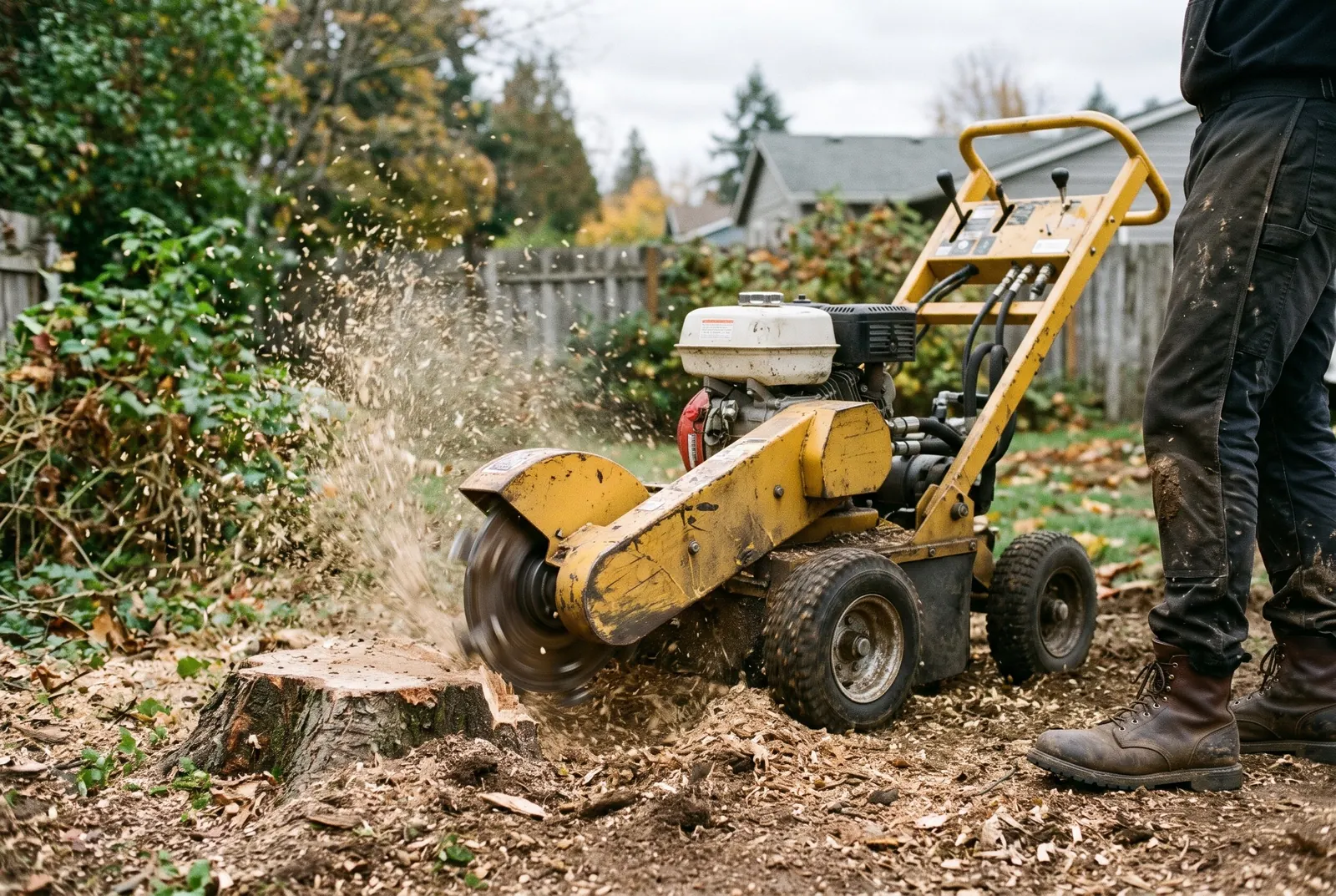
Why they're a problem in a lawn
- Mowing. Exposed roots catch blades, scalp the turf, and can throw debris. UGA Extension notes mower blades also strip bark and cut roots on trees that are still alive.
- Tripping. Raised roots and the dips beside them are easy to miss in long grass or under leaves.
- Thin grass. Purdue Extension notes roots compete with turf for water and nutrients, so grass over and between them often struggles.
- Uneven settling. Once the tree is gone, roots decay and the soil above them can sink in lines across the yard.
How root grinding works
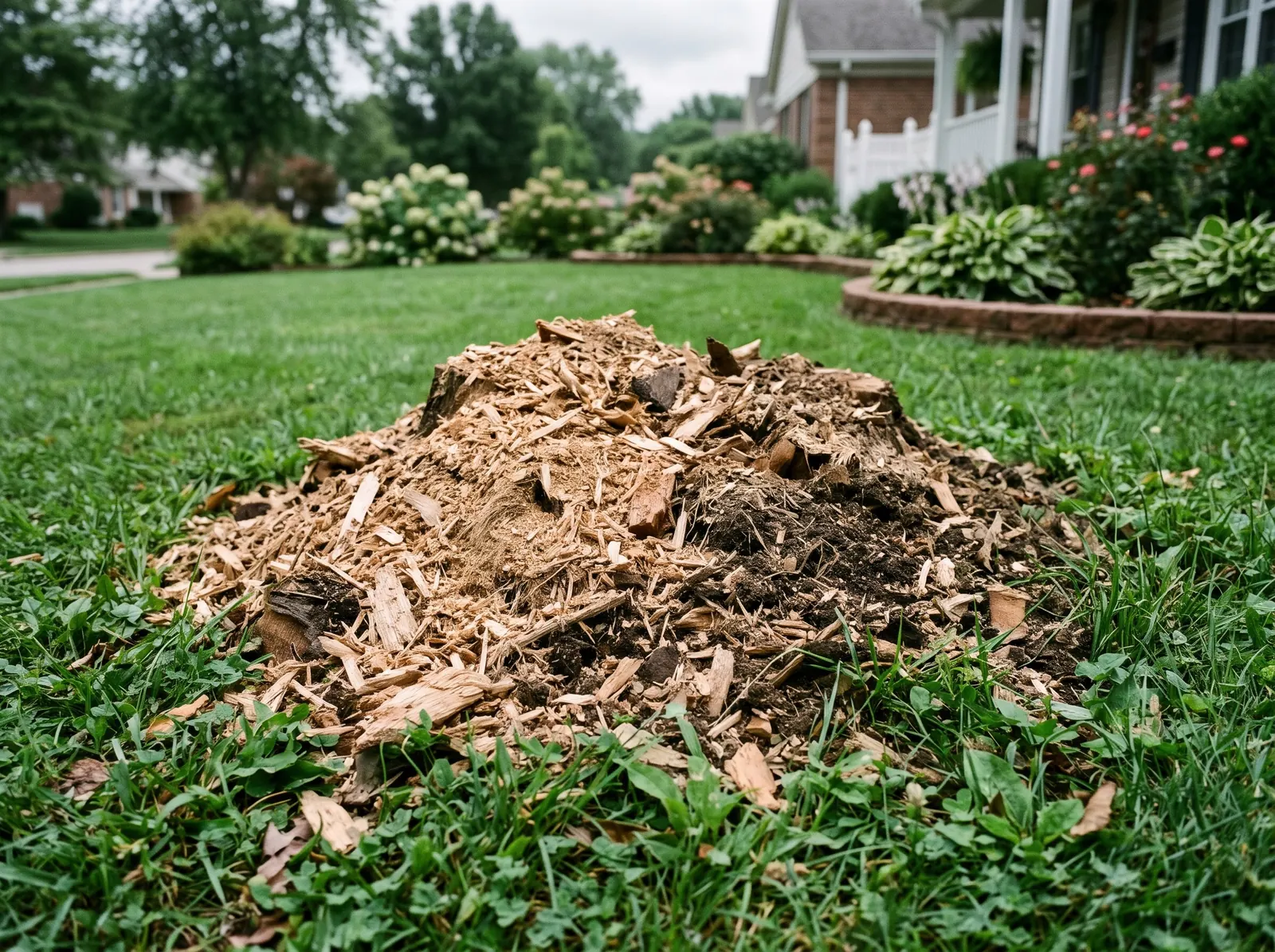
The same machine used for stump grinding handles roots. The operator follows each exposed root outward from the stump, grinding it a few inches below the surface. That leaves a shallow trench of chips and soil along the root's path.
How far are roots usually chased?
There is no standard distance. It depends on what you can see, what you can feel under the turf, and what you agree on up front. Quotes often cover only the stump and the flare of the main roots right next to it. Anything beyond that is often billed by time. Lawn Love lists root removal at about $150 per hour, and HomeAdvisor lists root work at about $100 to $200 per hour. Those are national figures; local pricing varies.
UGA Extension notes that structural roots can extend 3 to 6 feet from the trunk before tapering into smaller roots, and Purdue Extension notes roots spread well past the edge of the canopy. You will not get every root, and you don't need to. The goal is a lawn you can mow and level.
Put the scope in writing: which roots, how far out, and how deep.
Effect on nearby trees
This is the part to slow down on. A stump's roots and a living tree's roots often run side by side, and they are hard to tell apart under the lawn.
Purdue Extension says cutting or grinding out surface roots "can be one of the worst decisions for tree care if done indiscriminately." It reduces the tree's water and nutrient uptake and weakens its anchorage, which can make it more likely to fall in heavy wind. UGA Extension warns that the damage can show up years later as dropped limbs or decline. Losing structural roots on one side can make a tree topple in a storm.
Practical steps:
- If a living tree is within a few yards of the stump, ask the provider how they will tell its roots from the old tree's.
- For roots that belong to a tree you are keeping, talk to a certified arborist before any grinding. Purdue recommends that root pruning be done by a professional arborist.
- If the tree belongs to a neighbor, talk with them first.
- If the tree is in the tree lawn by the street, it is likely the municipality's. Check with your town or village before touching its roots.
Alternatives for roots of a living tree
Both Purdue and UGA recommend a mulch ring over grinding. Mulch keeps the mower off the roots and improves the soil over time. UGA suggests 3 to 4 inches, kept off the trunk. Purdue suggests 2 to 3 inches out to the dripline where possible. Both say not to bury roots under added soil, which can smother them.
Finishing the area
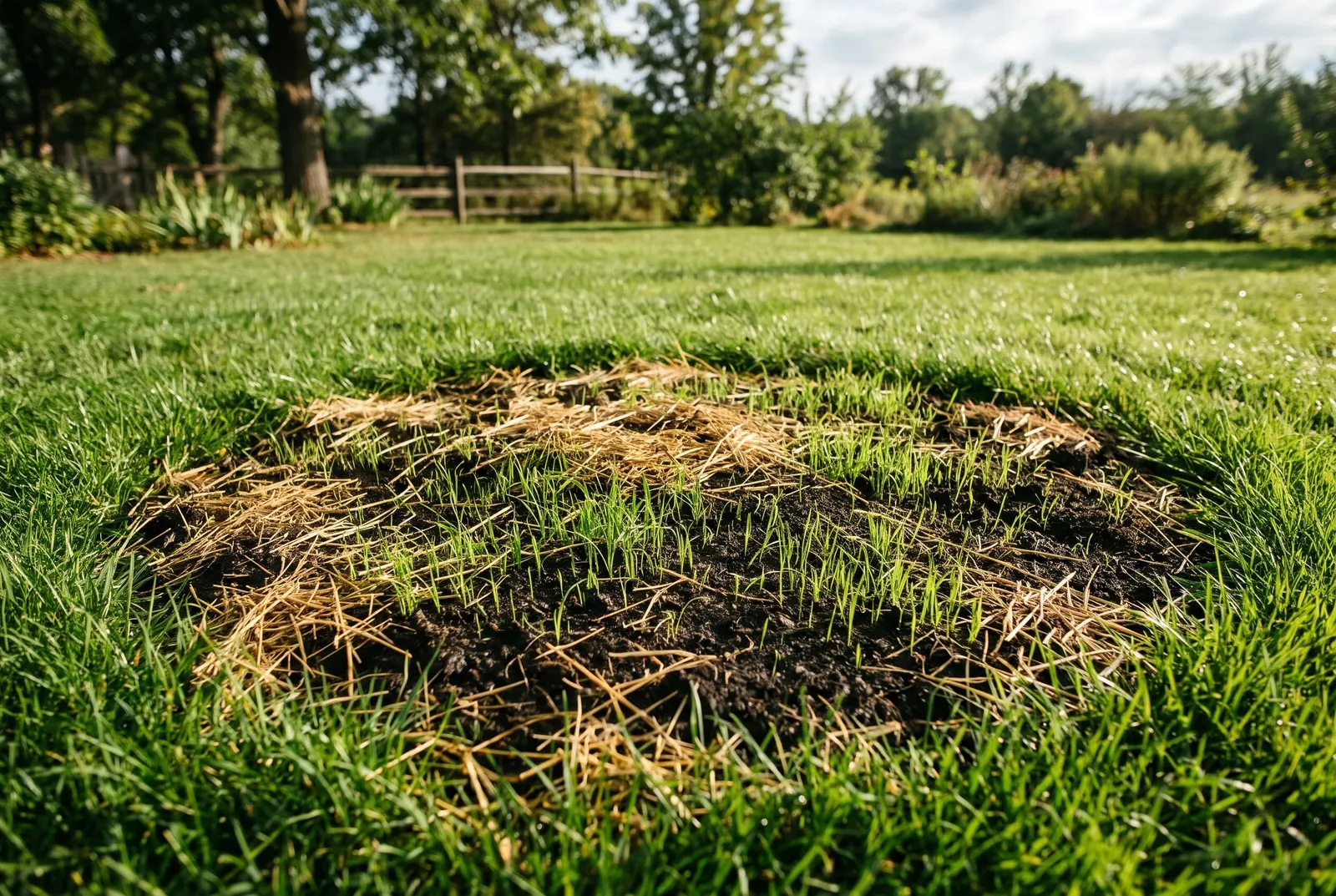
Root trenches get the same treatment as the stump hole: clear or blend the chips, fill with topsoil, and let it settle before you seed. After stump grinding walks through that. If roots are under a spot where you plan to build, stump removal may be the better fit.
Common questions
Is root grinding included with stump grinding?
Not always. Many quotes cover the stump and the base of the main roots only. Cost guides list root work separately. Lawn Love lists root removal at about $150 per hour, and HomeAdvisor lists root work at $100 to $200 per hour. Ask whether visible roots are included and how far out the provider will go.
Can I grind the surface roots of a living tree?
It's risky. Purdue Extension calls indiscriminate cutting or grinding of surface roots one of the worst decisions in tree care, because it reduces water uptake and makes the tree less stable in wind. If the roots belong to a tree you want to keep, have a certified arborist look first.
Will the roots left in the ground grow back?
Usually not, but it depends on the species and whether the stump was still alive. University of Illinois Extension notes that live stumps may resprout, and suggests treating the fresh cut if sprouting is a concern. Grinding the stump and the base of the main roots removes most of the wood that could send up shoots.
What can I do about surface roots besides grinding?
For a living tree, extension services recommend a mulch ring instead of mowing over the roots. UGA Extension suggests 3 to 4 inches of mulch kept off the trunk; Purdue suggests 2 to 3 inches out to the dripline where possible. Both advise against piling soil on top of roots.
Sources
- Purdue Extension: Tree roots and lawns (FNR-585-W)
- UGA Cooperative Extension: Troublesome tree roots
- University of Illinois Extension: What to do with a tree stump
- Lawn Love: How much does stump grinding cost? (updated Dec 2025)
- HomeAdvisor: How much does tree stump removal cost?
- Town of Amherst: Street tree inventory presentation (Davey Resource Group, 2023)